In this version, we manually reassigned the textures for every (yes) biome and structure.
Except for a few snags (oceans, mostly) - every biome is now represented by a unique set of textures, with variations for height where they're available.
This means that the mod once again utilizes all the built-in textures, instead of a subset.
Specific improvements include:
* Explored void in the end now shows a subtle static texture
* Ice is now detected and shown on the map, instead of just frozen rivers
* Badlands have been improved again
* All peak tiles (plateaus, mountains, etc) now connect to better express their elevation.
* Villages now use per-biome textures for small houses
* Animal pens now use the animal pen texture, instead of the farm texture
* Improve tiling between tiles with borders (snow, ice, plateaus, etc) and structures
* New textures (mostly composites):
* Terracotta Shrubs (Badlands)
* Low Grassy Hills (Plains)
* Low Snowy Hills (Snowy Plains)
* Plateau w/ Grass + Daisies (Meadow)
* Plateau w/ Grass + Dandelions (Meadow)
* Snowy Cliffs (Snowy Slopes)
* Water Ice Spikes (Deep Frozen Ocean)
* Ice Ice Spikes (Frozen Ocean)
* Static Void (The End)
* Snow Shore (Snowy Shores)
* Swamp Water Mangroves (Mangrove Swamp)
* Low Grassy Bamboo Hills (Bamboo Forest)
Here's a peek using the dev fullscreen mode from 2.x:
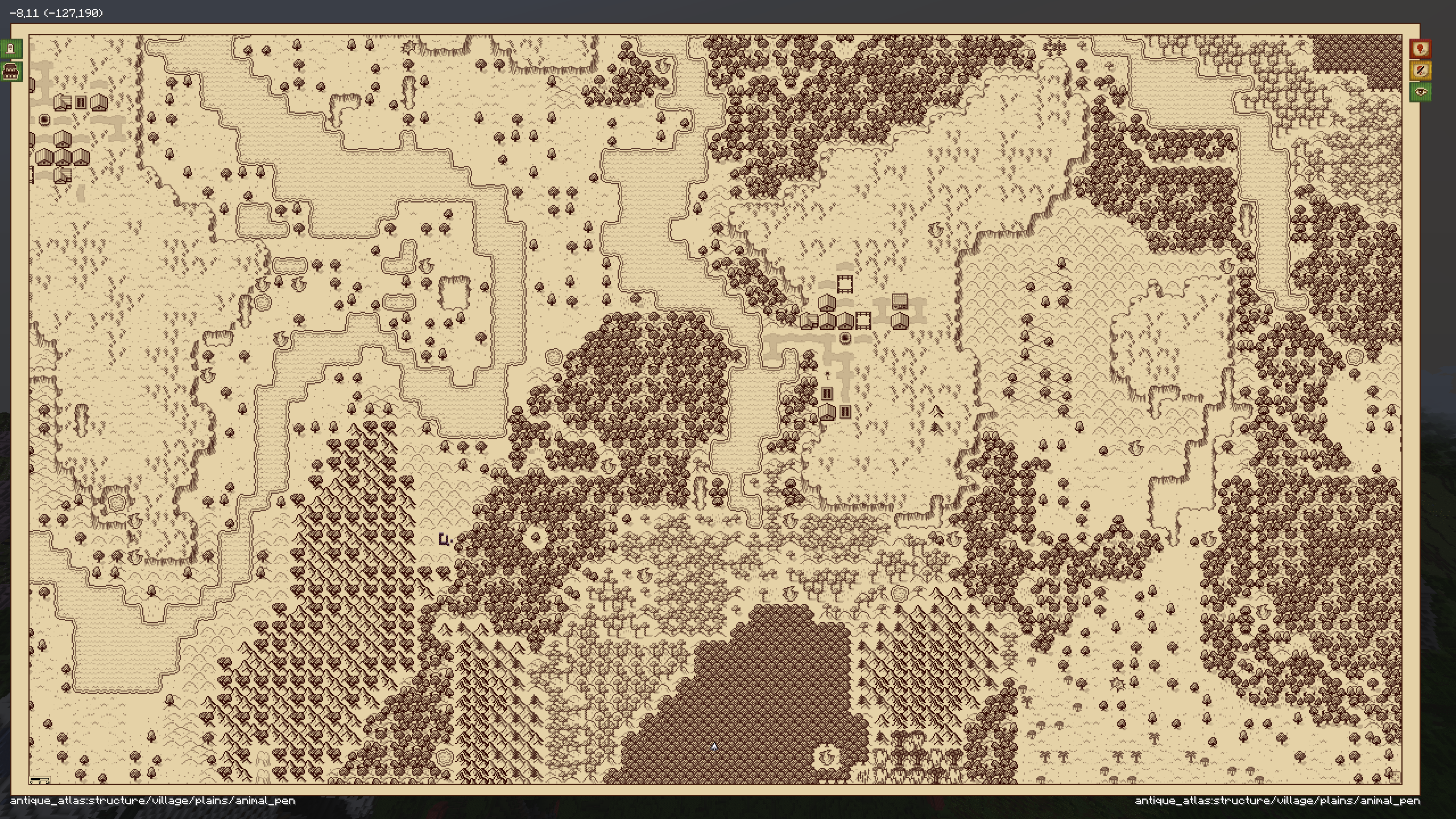
There are a few small limitations of the format still in play, like plateaus needing to cut off their edge to display a ravine, but it's an improvement overall.
Note that this release also **renames and moves every tile texture and texture set**.<br/>
Resource packs that replace or rely on these builtins will cease to function until updated.
Changelog: https://github.com/sisby-folk/antique-atlas/releases/tag/v1.4.0
Developer information
Projects on Modrinth are automatically available through a Maven repository for use with JVM build tools such as Gradle.
maven { name = "Modrinth"; url = "https://api.modrinth.com/maven" }